

The Westsider™ · Vol. 1
Field notes from the west side of Austin

Cover story · No. 05
The 70-page report. How to survive the inspection.
By Diana Roberts · The Westsider™
A good house can come back from inspection with a seventy-page report that makes it sound like it is falling down. Most of the time it isn't. The report is long because the inspector did the job, and the deal gets into trouble when nobody explains what the pages actually mean. This is how I read an inspection, what shows up in almost every Austin report, and how buyers, sellers and agents get through the repair negotiation with the deal and their sanity intact.
The inspector’s job is to find everything
A home inspector’s job is to find every issue in the house: the major ones, the minor ones and the cosmetic ones. In Texas, inspectors use a state form from the Texas Real Estate Commission, and they mark an item “deficient” when it needs attention. That word covers a failing roof and a missing outlet cover alike.
The state also requires inspectors to mark some items deficient even when the house met the building code on the day it was built. Older electrical protection, older glass near doors, missing smoke alarms and similar items all get flagged, because the safety standard has moved since the house was finished. That is good information. It is not the same thing as “this house was built wrong.”
So a thorough report on a well-kept twenty-year-old home can easily run seventy pages. A buyer reading it alone at midnight sees a money pit. A seller reading the repair request sees an insult. Both are reacting to the length, not the house.
Same house, two days apart
The house they fell in love with, and the one in the report.
 Under contract
Nothing about the house changed between these two pictures. Only the lighting did.
How I read a 70-page report
One report, three piles.
Systems
Roof, HVAC, plumbing, electrical, water heater, pool equipment, foundation.
Worth negotiating when something isn’t working or is failing.
Safety
Smoke alarms, outlet protection, glass near doors, railings. Often flagged because today’s standard is newer than the house.
Usually small, often cheap. Fix it or credit it.
Wear and tear
Paint, carpet, scuffs, sticky doors, a scratched floor. The marks of a house that has been lived in.
Already in the price you agreed to.
In Texas, a resale home is sold as is
Unless you are buying new construction, where the builder usually works through a punch list that includes cosmetic items, a resale home in Texas is sold as is. The standard Texas resale contract says the buyer accepts the property in its present condition. Buyer and seller agreed on a price for the house as it sits.
The contract can also list specific repairs the seller has already agreed to make. Those are part of the original deal. They are completely separate from any repair request that comes after the inspection.
The inspection happens during the option period. That is the window, paid for with the buyer’s option fee, when the buyer can walk away for any reason. If the inspection turns up something that changes the buyer’s view of the house, the buyer can ask for repairs, a credit or a lower price. The seller can say yes, say no or counter. Nobody is obligated to agree, and that is exactly why this part of the deal gets tense.
The option period
The clock is the real deadline. Plan the days.
- Day 1InspectionThe general inspection, with the buyer there for the summary if possible.
- Days 1 to 3SpecialistsSewer scope, engineer, roofer, pool, septic or well, as needed.
- Days 2 to 4BidsReal numbers from licensed contractors, not guesses.
- Day 4 or 5The requestOne clear package: repairs, a credit or a price change.
- Last day5:00 p.m.The option period ends. Agree, extend in writing or decide.
Option periods are negotiated, so the number of days varies. The deadline in the standard Texas contract is 5:00 p.m. local time on the last day.
The water heater is always in the report
I have rarely seen a report without the water heater in it. Either it is installed incorrectly in some way, or it is “past its useful life.”
“Past its useful life” is an interesting phrase, because the water heater is still working. It means the unit is older than the age most water heaters reach. It does not mean it is about to fail. When I bought one of my own homes, the inspection called out the water heater as past its useful life. It was working, so I left it. It worked fine for the next ten years and never caused a single problem.
That is why I tell buyers to get a home warranty, especially on an older home. Water heaters have a well-known habit of failing shortly after a new owner moves in. A warranty turns that surprise into a service call, and the Texas contract even lets the seller agree to pay toward one. It is often a cheaper fix than fighting over a working water heater in the negotiation.
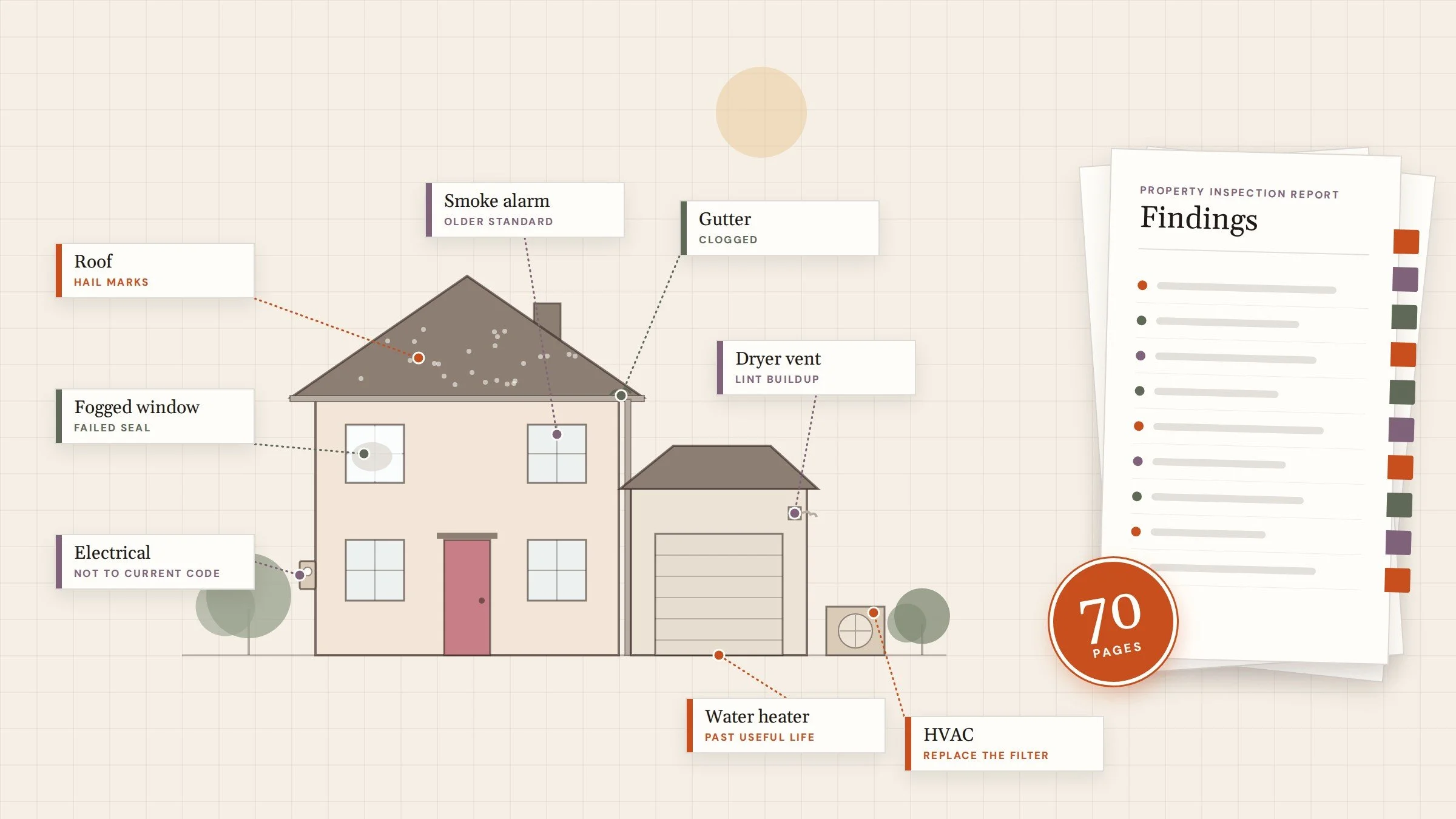
What shows up in almost every Austin report
After enough inspections, you see the same items over and over. None of them mean the house is bad. Here is what usually comes up and how I think about each one.
Electrical “code” items. The inspector notes that the electrical work doesn’t meet code. Often the work was permitted and correct under the code when the house was built, and the inspector is comparing it to today’s standard. To a buyer who doesn’t know that, it sounds alarming. The real question is whether anything is unsafe or not working, and a licensed electrician can answer that.
Water heaters. Age, venting, drain pans, the pressure relief line. See above. Usually a home warranty conversation, not a deal breaker.
Fogged windows. Cloudy double-pane glass means the seal between the panes has failed. It is usually an easy replacement of the glass unit, not the whole window, and it may still be under the manufacturer’s warranty.
Cracked glass. Also usually easy. The cost depends on the size and type of glass, from inexpensive to genuinely expensive for large or specialty panes.
Roofs and hail. Austin gets a lot of hail, so many roofs show hail marks. Some of it is cosmetic. Some of it shortens the roof’s life. And there is always something on a roof: flashing, a missing or broken tile, a loose or clogged gutter. If the report raises real questions, get a roofer to look, not just the inspector’s photos.
HVAC. With our weather, air conditioning and heat run nine or more months a year. These systems are the little engine that could: chug, chug, chug. Reports often find air leaks in the ductwork, condensation problems, or organic growth from our humidity. All of it is fixable, and some of it can be expensive. Sometimes the note is simply to replace the filters.
Pools. If there is a pool, there will be something in the report. Equipment, bonding, a cracked tile, a slow leak. A pool company can tell you which ones matter.
Smoke alarms. Older homes almost always come up short here, because the standard for where alarms go has changed. It is one of the cheapest items on the list to fix.
Dryer vents. Huge amounts of lint can build up inside the dryer vent line, especially on long runs through the attic or out to the roof. It is a real fire hazard and one of the easiest items on the list to fix: have a dryer vent cleaning service clear the line.
Controversial plumbing. Some plumbing materials, and some specific products from certain years, have real failure histories, and those stories are true. But they apply to particular products, not to every pipe of that type. A good inspector who sees something worth checking recommends that a licensed plumber evaluate the water system. Inflammatory language in a report helps no one.
Field guide · Austin inspections
What the report says, and what to do next.
General guidance from Diana’s experience, not a substitute for the inspection itself or advice from a licensed contractor.
When it really is a problem
None of this means every report is harmless. A few things deserve real attention, and a good agent knows which ones.
Foundation movement. Austin’s clay soil moves, and so do some houses. The old rule of thumb is that a crack you can slip a coin into, usually a quarter, is worth a closer look. Hairline cracks in stucco are a different story: as the saying goes, ice cream melts and stucco cracks. What matters more is the pattern. Doors that stick or won’t latch, cracks over doors and windows, floors you can feel sloping, gaps where walls meet the ceiling: those are reasons to bring in a foundation specialist or, better, an independent structural engineer. An engineer has nothing to sell you. A repair company does.
Water and flooding. Active leaks, stains that are still damp, and poor drainage around the house matter more than almost anything cosmetic. Flood risk matters too, and Austin buyers often forget to check it. Look the address up on the FEMA flood maps and the City of Austin’s floodplain tools, read the seller’s disclosure for past flooding and flood insurance claims, and get a flood insurance quote during the option period. A standard homeowner’s policy doesn’t cover flooding.
The sewer line. The line from the house to the street is underground, so a standard inspection can’t see it. Tree roots, sagging pipe and old cast iron or clay can mean a repair that costs more than everything else in the report combined.
An old or undersized electrical panel. Many older homes still have their original panel, sized for a house with far fewer appliances and far less air conditioning. Reports often find double-lugged connections, two wires where the panel was designed for one, which is not to code. When the inspector recommends upgrading the panel, take it seriously. It is a real cost, often around $10,000, and it comes up all the time on flipped homes.
Work done without permits. Additions, patio covers, garage conversions, decks and pools that were never permitted can become the new owner’s problem.
The nose knows
Pay attention to how a house smells. The human nose is remarkably good at picking up trouble: decay, mold and mildew, pet odor, lingering human odor, and plumbing or sewer problems. Fresh paint and a scented candle can cover a lot, but not for long, and not from a careful nose.
If you smell something, it probably deserves a closer look. When someone walking the house says “that’s weird,” treat it as an alarm to look further, not a comment to the air. Tell your inspector exactly where you noticed it and ask them to start there.
Where to look for organic growth. Under almost every sink there is a chance for organic growth, because water, warmth and a dark cabinet are all it needs. The obvious places to check:
Under the kitchen sink, and under the bathroom sinks too.
In the water heater closet.
Around the indoor HVAC equipment and the ducts, where our humidity and condensation do their work.
A small stain from an old leak that was fixed is a cleanup. A musty smell with active moisture is a reason to find the source, and sometimes to bring in a specialist who can test.
What a standard inspection doesn’t cover
A general home inspection is a visual look at what the inspector can reach. It doesn’t dig, cut into walls, scope pipes or test water. A good agent keeps a list of specialists and knows when each one is worth the money. Here is mine. Order them in the first day or two of the option period, because good specialists book up.
Beyond the general inspection
The specialists, and when to call them.
Sewer camera
WhenOlder homes, big trees near the line, slow drains or any home with original plumbing. One of the best values in real estate.
Structural engineer
WhenSticking doors, sloping floors, cracks you can fit a quarter into, cracks over doors and windows. Independent, with nothing to sell.
Termite and pest
WhenAlmost always. A wood-destroying insect report from a licensed pest company. Some loans require one.
Septic
WhenAny home not on city sewer, common around Spicewood, Lake Travis and the Hill Country. A licensed septic company, plus the permit record.
Well
WhenAny home on a private well. Test the water quality and how much water the well actually produces.
Roofer
WhenAfter hail, or when the report questions the roof’s age or condition. Ask about past insurance claims too.
Pool
WhenEvery pool. Equipment, plumbing, surface and leaks are beyond a general inspection.
Flood check
WhenEvery Austin home. FEMA and City of Austin flood maps, past claims on the disclosure, and a flood insurance quote.
Permit history
WhenAdditions, patio covers, pools, garage conversions, or anything that looks newer than the house. A few minutes with the city or county.
Order specialists in the first day or two of the option period. Diana can recommend people for each one.
What the seller’s disclosure can and can’t tell you
In Texas, the seller fills out a disclosure about the condition of the house. It is important, and sellers should take it seriously. But it only covers what the seller knows. It should be complete, and a seller can’t disclose what they don’t know.
Here is a real example. A homeowner hired a contractor to build a covered patio. The work looked professional and the structure was solid, so the owner never thought twice about it. They sold the house. Nine months later, the new owner found out the patio cover had never been permitted.
The seller hadn’t hidden anything. They didn’t know. The lesson is for the buyer’s side: the buyer, their agent and their inspector should have checked. If a house has an addition, a patio cover, a pool, a converted garage or anything that looks newer than the rest, look up the permit history with the city or county during the option period. It takes a few minutes and can save a very expensive surprise.
New finishes, old bones: a flip I remember
One of my own deals shows how this plays out. The house was built around 1950 and had been flipped. Honestly, the flipper did an exceptional job on what you could see: new floors, a new roof, a new kitchen, new bathrooms. It looked like a new house.
Then the buyer’s inspection came in and found real issues underneath. The electrical panel was old, too small for a modern home and full of double-lugged connections. The report recommended upgrading it, about a $10,000 job, and the buyer would not move forward without it. The seller was upset with everyone.
The sewer line told the same story. It was the original cast iron, all the way to the city connection at the street. Cast iron rusts and breaks down over time, especially as it approaches seventy years of service. A sewer camera inspection showed the line was still working but near the end of its life. The buyer accepted the sewer as it was. Replacing it would have cost somewhere around $15,000 to $25,000, and on a house that looked new, the flipper probably should have done it.
Here is the lesson. When a house looks new, it makes a quiet promise that the systems are new too. In this house the floors, the roof, the kitchen and the baths were new, and underneath it all the bones were old, old, old. The buyer’s expectations weren’t unreasonable. The house set them.
Buying a flip? Check the bones:
The electrical panel: its age, its size and whether it was upgraded with permits.
A sewer camera inspection, especially on homes built before the 1980s.
The age of the HVAC and the water heater, not just how they look.
Permits for the remodel, the roof and any electrical or plumbing work.
Receipts and warranties for everything the seller says is new.
Renovating to sell? Do the bones first. The panel and the sewer line aren’t pretty, but they are exactly where a buyer’s inspector will look.
A good inspector is your best guide
The inspector is not the villain of this story. Like every profession, some inspectors are better than others, and the best ones are extraordinary. They walk their client through the report, the good, the bad and the ugly, and explain which items are routine, which are worth a specialist’s opinion and which are serious. A report is a list. A great inspector turns it into perspective.
The trouble usually starts when a buyer reads seventy pages alone, without that conversation. So if you are buying, be there for the inspector’s summary, or ask for a call to go over it. If you are the agent, make sure it happens.
And sometimes the inspection does exactly what it is supposed to do: it shows a buyer that this is not the right house. Walking away during the option period is not a failure. It is the system working.
Systems, not cosmetics
This isn’t a rule, but it is the best guide I know: repair requests should focus on systems, not cosmetics.
Systems are the things that make the house work: the roof, HVAC, plumbing, electrical, the water heater, pool equipment and the foundation. Most buyers reasonably expect those to be in working order, and most sellers understand why.
Cosmetic items are the wear and tear of a house that has been lived in. Scuffed paint, worn carpet, a sticky door, a scratched floor, more of it if the owners had kids or pets. That was visible when the buyer made the offer, and it is part of the price both sides agreed to.
Don’t take it personally
The most important thing I can tell a buyer or a seller about the repair negotiation is this: it is not personal.
It is a negotiation, and each side wants what is best for them. Unless they are buying to remodel, buyers want the house as close to perfect as possible. Sellers want to keep their money in their closing proceeds. Both are reasonable. Put them together and you get a strange dance.
In my experience, the number that most often kills a deal is about $5,000. A buyer and seller who agreed on a seven-figure price will walk away from each other over a gap that size, because by then it feels like a matter of principle.
That is usually the moment all eyes turn to the agents to make up the difference. Agents should not be the bank. When agents pay for repairs out of their commission every time, it teaches everyone that the gap will always be covered, and the next negotiation gets harder.
What agents should do, and what good ones do every day, is keep the peace. Behind the scenes, this is one of the most stressful parts of the job: reading the report, calming a buyer who is scared, calming a seller who is offended, finding the version both can live with, and doing all of it with a smile and kind words. Good agents make it look easy. It isn’t.
Repairs, a credit or a lower price
There are three ways to settle an inspection, and each one works differently.
Seller repairs
Good whenThe fix is clear, and the buyer wants it done before moving in.
Watch forThe buyer doesn’t control who does the work. Ask for licensed contractors, permits where required, receipts and any warranties.
A credit at closing
Good whenThe buyer would rather choose their own contractor and do it their way.
Watch forLenders limit how much a seller can credit, and credits usually go toward closing costs. Check with the lender before agreeing.
A lower price
Good whenThe issue is big or uncertain, or a credit is limited by the loan.
Watch forIt lowers the loan and the payment a little, but it doesn’t put cash in the buyer’s hand for the repair.
General guidance only. Any change is made in writing with an amendment to the contract.
For agents: words that help
Most of the job in this moment is tone. Here is what I actually say.
To a buyer the night the report arrives: “This report is long because your inspector was thorough, not because the house is bad. Let’s sort it into three piles tomorrow: systems, safety and wear and tear. Then we’ll decide what’s worth asking for.”
To a seller reading the repair request: “This isn’t a judgment of you or your home. It’s the buyer protecting themselves, the same way you would. Let’s look at what’s real, get numbers and decide what makes sense to give.”
When two sides are stuck on the last few thousand dollars: “We’re a few thousand apart on a house you both want to close on. Let’s compare that to the cost of starting over: another month on the market, another inspection, another negotiation. Is there a number in the middle you can both live with?”
The four-year rule
Here is something many sellers don’t know. The Texas REALTORS® seller’s disclosure, the form most Austin agents use, asks whether the seller has received any written inspection reports on the home in the last four years. If the answer is yes, the seller attaches copies for the buyer. That covers general home inspections and specialist reports alike: roof, HVAC, plumbing, foundation, pool, termite and more.
That is why Austin has a practice that surprises people. When a buyer asks for repairs, the buyer’s side usually sends the seller a list of the items they want fixed, not the full inspection report. If the deal falls apart, the seller hasn’t received a report they would then have to hand to every buyer who comes after. The report also belongs to the buyer who paid for it.
A seller is usually better off seeing the specific requests, with photos or a contractor’s bid where it matters, than the whole seventy pages. And if a report does change hands, everyone should know it will travel with the house.
Should a seller get an inspection before listing?
My answer is yes. I recommend that every seller have the home inspected before it goes on the market.
A pre-listing inspection shows you what the buyer’s inspector is going to find, before a buyer is making demands. You get to decide what to fix, on your own schedule, with your own contractors and at your own prices. Repairs done ahead of time cost less than repairs negotiated under an option-period deadline, and a house with fewer surprises usually has a calmer, shorter negotiation. Buyers also tend to trust a seller who shows them the report and the receipts.
There is a case against it, and it is worth knowing. Anything the inspection finds is something you now know, and you have to disclose what you know. Under the four-year rule, the report itself goes to future buyers too. Some sellers would rather not have a fresh list of every item in the house.
It is always the homeowner’s choice. I see a lot more value in knowing than in not knowing. If you are going to have to deal with the items anyway, it is far better to deal with them on your terms than on a buyer’s.
Before you list: small fixes that shrink the report
Even without a full pre-listing inspection, a few inexpensive fixes take the easy items off the buyer’s list:
Have the HVAC serviced and replace the filters. Keep the receipt.
Replace old or missing smoke alarms.
Have the dryer vent line cleaned out.
Look under every sink and in the water heater closet. If anything smells musty, find the source and fix it.
Clean the gutters and make sure water drains away from the house.
Replace fogged or cracked glass.
Check the water heater for a drain pan and a proper relief line.
Fix leaky faucets, running toilets and missing outlet covers.
Gather permits and warranties for past work, like a new roof, HVAC or a pool.
A short checklist for the middle of a hard negotiation
Sort the report into systems, safety items and wear and tear before anyone asks for anything.
Get bids from licensed contractors, not guesses. Real numbers calm people down.
Ask for one clear package, not a running list.
Consider a credit or a price change instead of repairs. It is often simpler for everyone.
For anything about a water heater or an older system, talk about a home warranty first.
Order any specialist inspections in the first day or two. They take time to schedule.
Remember the deadline. The option period ends at 5:00 p.m. on its last day, and the decision has to be made in time.
Keep the conversation about the house, not the people.
The full step-by-step, from the option period to closing, is in my guide to what happens under contract. If you are preparing to sell and want to know what an inspector is likely to find first, start with how I sell a home.
Quick answers
Do Texas sellers have to make repairs after an inspection?
No. A Texas resale home is sold as is unless the contract lists specific repairs. After the inspection, the buyer can ask for repairs, a credit or a lower price, and the seller can agree, say no or counter.
What is the option period?
A set number of days, paid for with the buyer’s option fee, when the buyer can end the contract for any reason. Inspections and repair negotiations happen during this window.
Is a 70-page inspection report a bad sign?
Not by itself. Inspectors list major, minor and cosmetic items, and Texas requires some items to be flagged even if they met code when the house was built. What matters is which items affect the home’s systems or safety.
Why don’t sellers get a copy of the buyer’s inspection report?
The report belongs to the buyer who paid for it. And the Texas REALTORS® seller’s disclosure asks sellers to attach written inspection reports they received in the last four years, so a seller who receives one may have to share it with future buyers if the sale falls through. Buyers usually send a list of requested repairs instead.
Should I get an inspection before I list my home?
It is your choice, and I recommend it. It lets you find and fix issues on your own terms before a buyer asks. The trade-off is that you must disclose what you learn, and the report itself becomes part of your disclosure.
What should I check when buying a flipped house?
Look past the new finishes to the systems: the electrical panel, a sewer camera inspection on older homes, the age of the HVAC and water heater, permits for the remodel, and receipts and warranties for anything described as new.
What does it mean if a house smells musty?
A musty smell usually means moisture, and moisture can mean mold, mildew or a leak. Check under the sinks, in the water heater closet and around the indoor HVAC equipment, tell your inspector where you noticed it, and find the source before the option period ends.
What inspections are not part of a standard home inspection?
Common extras include a sewer camera inspection, a structural engineer for the foundation, a termite inspection, a pool inspection, septic and well inspections for rural homes, a roofer after hail, and a check of flood risk and permit history.
Inspectors I trust
Three inspectors I’d send my own family to.
Bobby Ortiz
Off Duty Pro Home InspectionsBobby@offdutypro.netChad
Power Checkpowercheckoffice@gmail.comYou are free to choose any licensed Texas inspector. I don’t receive anything for these referrals. Check any inspector’s license at trec.texas.gov.
If you are in the middle of a hard inspection right now, buying or selling, call or text me at 512.888.8326. I’m happy to read it with you.